Senin, 23 Juli 2012

Motif: Art Transplant

Motif (group)
Art Transplant (Clean Feed; 2011)
Havard Wiik (piano)
Ole Morten Vagan (bass)
Hakon Mjaset Johanson (drums)
Atle Nymo (sax)
Axel Dorner (trumpet)

Motif is a Norwegian quintet that is celebrating just over ten years on the scene. Each of the members has a stellar career on their own, but together they have produced four phenomenal albums that rely on modern thinking but root themselves in the traditional ethics of improvisation. Motif's latest, Art Transplant is their first for Clean Feed Records after two acclaimed records for Jazzland and Aim.

Art Transplant feels like it was always going to be the right move for the band. It's risky and combines elements of the ensemble's modern thinking with more adventurous muscle than previous records. "Korean Barbeque Smokeout" starts with a bit of quiet investigation from Nymo before the rest of the band burst through with a collision of sound. The explosion rips the fabric of the harmonics and makes for a beautiful convergence of ideas; at times feeling like Ornette Coleman's quartet circa Shape of Jazz To Come.

Dorner and Nymo provide an intense but also playful exchange at the beginning of "Alkiis" which later levels off to improvised dialogue between Dorner and Wiik. Gradually each member returns and the melody ebbs into exchanges for Wiik before the group finally comes full circle for a rousing conclusion.

The inquisitiveness of "Something For The Ladies" with Nymo on clarinet playing rich lines that reminded me of Don Byron. The piece is frenetic but with a soft tone just underneath the wind instruments. It's sneaky like nice slice of spy-jazz from the 60s and great mid-section where Wiik gets to fly were some terrific improvised notes.

Motif has shown that each album is more diverse than the next. With a solid lineup that doesn't seem to change, the ensemble is always in complete unison. And with Art Tansplant, they've shown that their unity breeds exciting creativity and fluidity.

Sabtu, 21 Juli 2012

The Intersection: Outerattik

The Intersection is an ongoing feature on jazzmusic24 that looks at artists that have blended jazz, world and electronica in new and highly creative ways.

Outerattik (electronics)
Attic (Self-produced; 2012)

Jamie Smith, aka Outerattik, is one of those rare finds that you go, "this is too cool, I have to tell all my friends." Well, I'm kinda of gonna do that.


A well focused EP in the form of Attic, introduces us to this Edinburgh, Scotland native. Attic delivers a vibe that is rich in jazztronica but also refreshing in the way that shines with vitality and soul.

"Nineties Man" while referencing the sound of early trip-hop also has a nice slice of 70s funk in form of a hammond B-3 sound layered over the drumbeat. Smith gives the piece some real soul and charm while also providing a calm background for the senses.

"Electro Funk #50" is a space age tingler that uses some great 80s videogame vibes to create a groovy futuristic soul that will have you bobbing your head but also intrigued by the simplicity and effectiveness of piece. This is a more subdued version compared to the original which laid on a heavy bass line that pounds right into chest with verve.

"Attic Faery," probably my favourite piece is the quiet sweeping centerpiece, that while delivering soft encompassing tones, is also quite romantic. It's got the epic qualities of Thievery Corporation blended with elegance of Tosca and soulfulness of Spacek. A standout and highly appropriate closing number.

With Attic, Outerattik have created an album that is raw, soothing and funky. Chilled out? Yes. But it's a downtempo groove that you'll want to keep coming back to. And hopefully a good sign of things to come from this young musician. Worth seeking out.

Kamis, 19 Juli 2012

Bruce Barth: Three Things Of Beauty


Bruce Barth (piano)
Three Things Of Beauty (Savant; 2012)
Steve Nelson (vibes)
Ben Street (bass)
Dana Hall (drums)

Bruce Barth is one of the most respected pianist on the scene and rightfully so. A talent with a discography that stretches now to 12 albums and countless guest appearances, Barth has been consistent and always refreshing.

On his latest, Three Things Of Beauty, Barth delivers a sophisticated yet bubbly document of harmonies that is sure to have fans and newcomers enthralled. Always a delicate and nimble player, Barth orchestrates some superb lines on the opener "My Man's Gone Now." The tune jumps and burst with enthusiasm. The stellar line-up of Nelson, Street and Hall gives Barth a chance to hang back in addition, allow his mates to shine, as Nelson and Street do with some lovely exchanges.

"Wise Charlie Blues" shows the continued influence Thelonious Monk has had on Barth. A complicated playfulness I always like to call it. A dedication to a dear friend of Barth's, he mixes blues, gospel and improvisation into a health dose melodica. His bandmates add blue-ish hue to the tune while Barth places the emphasis squarely on empathetic notes.

"Three Things Of Beauty," a ballad with more emotion and dreamlike qualities than I originally thought when I first listened to the tune, is sublime. Nelson's vibes echo across the melody. While Barth's presence is key here, he also allows Street and Hall to rise a little in this setting. It's much more a group piece than a usual album title track which would focus squarely on the leader.


"Wondering Why" is soulful, midtempo piece that is casual and yet still bouncy enough for you to get lost in the rhythm. The album closes with a duet between Nelson and Barth, "The Song Is You." A sweet tone and upbeat theme, the two joyously carry the listener out on a positive and festive note.

Bruce Barth has once again shown what a agile and perfect leader, composer and performer he is in almost any setting. The group he has circled himself with, while having played with them in various sessions in the past--this time they have really made sparks from beginning to end. If you haven't heard Bruce Barth before, now is the time to start taking notice. Three Things Of Beauty is one the best albums of an already glistening career. 


Selasa, 17 Juli 2012

Troyka: Moxxy

Tryoka (trio)
Moxxy (Editions; 2012)
Kit Downes (organ)
Chris Montague (guitar)
Joshua Blackmore (drums)

There's a rock element that is enveloping British jazz at the moment. And that's actually a good thing. A new generation of musicians raised on a number of different forms are incorporating those themes into a fusion that is both adventurous and unique.


Troyka is one of those few of hybrid groups and they have delivered their second release, the intoxicating Moxxy.

Moxxy, is a mature sophomore effort from the UK trio. As with their debut, the rocking combustible time signatures are still there but now a sense of complete confidence arises within each piece. "Rarebit" bounces with electric funk and curling rhythmic structures creating a young Weather Report or King Crimson vibe across the top of the chords.

"Crawler," a beautiful slow moving blues piece is one of the highlights of the album. It plods along like being stuck in a recurring childhood fairytale with no end. Montague and Blackmore set the tone. Montague has some fantastic lines that are passionate and wrenching. Blackmore and Downes drag you along into the final passages where Montague finally lets loose with some licks that would be right home in a Chicago blues club.

"Island" and "Zebra" are both gentle, funky and cerebral. Both are raw with soft psychedelic touches of Downes' keys which on "Island" provides an other-worldly quality. And on "Zebra," the motif is more organic and a fluctuating level of funk. This is a sound that could sit neatly next John Scofield or Charlie Hunter. The sound gets big and gargantuan but maintains a clear focus that never allows the listener's ears to stray.

Troyka seems to have found their voice with Moxxy. The group has been playing together off and on since 2007 but this is the first time you feel that have captured what they really wanted to say. Moxxy is real gem for 2012. Highly Recommended.

Sabtu, 14 Juli 2012

SUPERBUGS SOLUTION: ALTERNATIVE HEALTH AND MEDICINE


WELL, HERE WE GO AGAIN:

Superbugs in chickens could be an underlying cause of antibiotic-resistant bladder infections in 8 million women, according to a new ABC News report.


WE WERE IN RETIREMENT AND NOW WE HAVE TO COME OFF THE BEACH AND WRITE ANOTHER I-TOLD-YOU-SO BLOG.

WE WARNED IN THIS BLOG YEARS AGO OF THE COMING PROBLEMS WITH SUPERBUGS DUE TO OVER USE IN BOTH MEDICINE AND AGRICULTURE (YOU CAN USE THE SEARCH ENGINE TO LOOK THEM UP).   THE TIME HAS ARRIVED AND IT WILL GET WORSE. WE WILL NOT LINGER ON THE PROBLEM BUT OFFER A QUICK SOLUTION SO WE CAN GO BACK TO THE BEACH AND WAIT FOR THE 1000 FOOT TSUNAMI.

GET YOURSELF A RIFE DEVICE, A MEDICAL OZONE MACHINE, SOME COLLOIDAL SILVER, PLENTY OF GARLIC AND OTHER GOOD HERBS AND PREPARE FOR AN EPIDEMIC, SOONER OR LATER.  MAKE SURE YOU HAVE A GOOD BATTERY BACK UP OR GENERATOR SYSTEM SO YOU CAN SUPPLY ELECTRIC POWER SINCE MOST EFFECTIVE DEVICES OUT THERE ARE DRIVEN BY ELECTRICITY.  BECOME VERY PICKY ABOUT WHAT YOU EAT:  IF GOD MADE IT, IT IS PROBABLY OKAY. IF MAN MADE IT, IT IS FILLED WITH TOXINS.  LEARN, ADAPT.  THAT IS ALL. SEE YOU AT THE SEA SHORE….OR MAYBE THE MOUNTAINS. 

THE KING OF THERAPIES:


THE EMPORER OF THERAPIES:


SYNOPSIS OF 100 GOOD HEALTH BOOKS:


ONE PAGE LIST OF GREATEST HEALTH AND ALTERNATIVE MEDICINE INFO


THIS SHOULD GET YOU STARTED AND KEEP YOU BUSY. DON’T PUT IT OFF.  GOD BLESS.


Joseph Santa Maria: The Illustrated Man


Joseph Santa Maria (sax)
The Illustrated Man (Self Produced; 2012)
Andrew Lessman (drums)
Emilio Terranova (bass)
Larry Koonse (guitar)

The extremely versatile Joseph Santa Maria shows once again that he can bend a rhythm and conjure up something new with each album. His latest, The Illustrated Man is great example of a crisp no nonsense modern jazz record.

I first came across Santa Maria's work through the brilliant album he did with his former group, A Giraffe, an album which was one of jazzmusic24's 2011 Albums of the Year. For The Illustrated Man, Santa Maria has assembled another quartet of musicians he has worked with for awhile to present a classic view with modern muscularity.

I loved the brashness of "Open Air." Strong, confident yet playful notes eminate from Santa Maria's sax followed by a complex set of patterns from Lessman's kit. The group then get into a groove with "Bud Powell" led by Santa Maria with Terranova and Koonse, performing some soft lines that give the piece a nice romantic feel underneath Santa Maria's bold and intricate notes. It's groovy but complicated, and that's a perfect mixture.


"I Saw A Color Box," a piece originally writing with A Griaffe, sounds more free form with Koonse on guitar (replacing the original piano lines). In addition, Terranova gives the bass lines a lot more muscle. "I Saw A Color Box" feels more fleshed out and I love it.

"Green And Black" a midtempo ballad with a revolving melody, allows the quartet to expriement and move in various directions but not in an avant garde fashion. This is more like floating along the edges of the original chords and creates an extra tapestry of notes that interconnect. "Making Music Time" holds a few soulful and blues-like tones and quietly leads the listener down the closing path to the conclusion of The Illustrated Man's journey.

Joseph Santa Maria again circles himself with a stellar band that not only helps interpret his material to perfection--they also make their notes their own. Santa Maria continues to grow with each project. The Illustrated Man is a more focused and linear project than his diverse work with A Giraffe--but both equally great starting points. The Illustrated Man is a solid effect from an artist that is still developing his voice but I think you'll tell your friends about this after one spin.

Rabu, 11 Juli 2012

Arts & Sciences: New You

Arts & Sciences (quartet)
New You (Singlespeed; 2012)
Jordan Glenn (drums)
Jacob Zimmerman (sax)
Michael Coleman (fender rhodes)
Matt Nelson (sax)

The American west coast continues to bubble with urgency, at least on the improvised front, so we turn to Oakland, CA and the dynamic talents of a new quartet, Arts & Sciences. On their second release, New You, released on Aram Shelton's Singlespeed Music (he also plays on one track), this quartet show that they have a lot of improvisational ideas that can fight with the best of the New York and Chicago scenes.

"Baby Boner" slowly rises with delicately paced improvised notes, then folds into a high octane, pulse-pounding collision of sound. It felt like a segment of Miles Davis' Agharta. Dueling tenor and alto saxophones cause a cacophony in the middle section which sound beautiful smashed against Coleman's keys and Glenn's unyielding kit. The quartet later come down gently in a psychedelic interlude of squeals on the rhodes and tiny percussion tones that give off a Steve Reich ambiance. 

The band site Tim Berne is an influence. It can be heard and felt in throughout but that's just the building blocks. Nelson and Zimmerman take that influence and turn it into their own fun, free floating  nihilistic structure. "Scram" illustrates this with a number of challenging expositions and exchanges between the horn section and clashing notes from Coleman and Glenn. The rhythm is easy to pick up but you'll probably be more entranced by how much fun they're having with this piece...brilliant!

"Scientology" is wonderful ensemble piece featuring Aram Shelton on clarinet, Rob Ewing (trombone), Theo Padouvas (trumpet) and Andrew Conklin (guitar). It's almost an improvised balled with echoes of Joe Zawinul sprinkled about. Pleasant yet strikingly bold. It's an expansive piece that allows the musicians a lot of freedom while maintaining a real clear direction.

Arts & Sciences did a brief tour last month; hopefully they'll be able to add some more dates soon. They are band that is worth every effort to see. New You not is a signal that more beautiful sounds keep coming from the west--its also an album deserving of much wider attention here and abroad. Highly Recommended!

Senin, 09 Juli 2012

Niski Szum: Songs From The Woods

Niski Szum (guitar)
Songs From The Woods (Audio Tong; 2011)

I'm actually more familiar with Polish electronic/guitarist, Marcin Dymiter's work with Arszyn than his solo material. But upon listening to his most recent release, Songs From The Woods, I have a lot of catching up to do. This is a brilliant work of sonic sculpture that at times is cold and dreamy yet romantic and spacious. It reminded me of Sonic Boom (ex-Spacemen 3). And that's impressive!

"Blues From The Green Hills" rides along like an American western. A bluesy theme accompanied by electronic manipulations/reverb provides for surrealistic journey into Dymiter new soundscape.

"The Woods Parts I-II" are Dymiter emitting a lush ambient tone that is reflective as it is cold. The piece is based on Robert Frost poem Stopping By The Woods On A Snowy Evening with Dymiter utilizing soft well masked vocals. It's passages provide a somber level of comfort and move the listen into dark territory--but you will actually like going there.

The highlight piece is "The River," a long dense droning number, with chords that eventually envelope you like a cocoon. Dymiter's use of guitars and electronics manifold into a swirling hypnotic blur as you enter the middle section of the piece. But somehow he pulls through to the other side with grace and beauty. It's that night you look up into the sky and everything seems almost perfect (for awhile) and then you brought  back to earth.

Songs From The Woods is a nice discovery and well balanced mixture of electronics, blues, folk and minimalism. So if you enjoy your music with touch of adventure and solitude, you would be well served by checking out Marcin Dymiter.

Jumat, 06 Juli 2012

Esbjorn Svensson Trio: 301

Esbjorn Svensson Trio
301 (ACT Music; 2012)
Esbjorn Svensson (piano)
Dan Berglund (bass)
Magnus Ostrom (drums)

E.S.T. are perennial favourites in the jazzmusic24 office. So when word came at the beginning of the year that new studio material was on the way, I was stoked with excitement.

The Swedish trio has been in the forefront of the European jazz scene for well over a decade. The tragic passing of founding member, Esbjorn Svensson, signaled the end of one of the best trios Europe has produced in a very long time. But the final music from the session that produced Leucocyte in 2009, also included material that shows how far the trio had come and where they were about to go. It's also a statement of how important they have become.

That session is now released under the title 301, after the studio for which it was recorded. Like it's predecessor, 301 is intensely dark and experimental. The opening track "Behind The Stars" is a solo piece driven by Svensson's steady tone that always had an element of Bill Evans or Keith Jarrett. A rich modular number that rises and descends with elegance. This is reminiscent of the group's earlier work--quiet like a chamber trio.

"Behind The Stars" transitions beautifully into seismic harmonic structures of "Inner City, City Lights." A slow moving ballad that catches Berglunds haunting basslines sounding like Mick Karn (maybe a stretch, but you know what I mean). A droning synth line hovers above Svensson's notes adding the cold electronic ambiance that E.S.T. had been researching on their previous efforts to this point. It's tantalizing and brooding but somehow still bursting with sublime vitality.

The epic, "Three Falling Free I-II" exhibits a Debussy calm and mastery. A romantic ballad that circles along the calculating notes of Berglund and Svensson. The elegance of Part I gives way to the fury of Ostrom's rhythmic patterns that roll independently and create the basis of freedom and experimentation for the second movement. Ostrom leds the trio through a more aggressive, almost rock orientated workout. The group are continually pushing themselves. "Three Falling Free" is one of those pieces that probably would have made the live audience go nuts. Amazing.

The gospel tinged "The Childhood Dream" closes out 301 on a supreme note. It's blossoming with charm, soul and a well balanced sense realism. A mirror to ones on reality.

As a document of one moment in time, 301 stands alone from its parent, Leucocyte. A darker album with mixtures of E.S.T.'s past, present and future. This may have been the last statement but it is by no means studio outtakes. It is also a declaration of how important this Esbjorn Svensson, Dan Berglund and Magnus Ostrom have been to the entire jazz scene over the last decade. Highly Recommended.

Senin, 02 Juli 2012

Rodrigo Amado: Burning Live At Jazz Ao Centro

Rodrigo Amado (sax)
Burning Live At Jazz Ao Centro (JACC Records; 2012)
Jeb Bishop (trombone)
Miguel Mira (cello)
Gabriel Ferrandini (drums)

A brief set but long in the compositional sense, Burning Live At Jazz Ao Centro, sees Rodrigo Amado in blistering form. This is a fierce recording of a live event that was probably exciting and very intense on concentration.

This group consists of Amado's Motion Trio augmented by trombonist Jeb Bishop (known not only for his own groups as well as his work with Ken Vandermark). For this live evening, Bishop provides strong, bold muscular lines that challenge the rest of the trio. "Burning Live" is just as it says--a fiery opener that later rounds into a rhythmic pattern that hovers almost blues-like thanks to Bishop. Ferrandini adds the abstract passages against Bishop's notes as both Amado and Mira quietly begin to re-emerge and set the piece aflame again. The quartet finally comes resting with calm clashes but still a heavy spirit.

"Imaginary Caverns" moves like a ballad but with the philosophy of free association. Quiet motifs soon rise and fall with Amado and Ferrandini's perspective on the harmonics. Midway through Amado's tone becomes a scorching mixture of Ornette Coleman/Albert Ayler. It's intense and beautiful but not for every ear. Bishop, Mira and Ferrandini beam with solid atonal exchanges that drain you until just the right moment when Amado returns to add some toppling hues to the closing bars.

Rounding out the evening is "Red Halo," led by Mira sounding fully focused and moving the group in a calm fashion toward the inevitable wall of sound. Mira's pace quickens while Amado and Bishop's dialogue starts to sound like one instrument. The quartet finally roll into one another in the final moments bringing an intense jubilant session to its logical yet bewitching end.

Truly, an absorbing performance and another very creative outing for Rodrigo Amado. There are only a handful of saxophonists on the European scene today that are as acute and descriptive as Amado. Burning Live At Jazz Ao Centro is a perfect example as to why. This same group will also have a new studio album out on Not Two later this year. 

Rabu, 27 Juni 2012

Mary Halvorson: Bending Bridges

Mary Halvorson (guitar)
Bending Bridges (Firehouse 12 Records; 2012)
Ches Smith (drums)
Jon Irabagon (sax)
Jonathan Finlayson (trumpet)
John Hebert (bass)

So I was having an argument with a friend as I was introducing him to one of my favourite artists and I finally realized something...Mary Halvorson is a threat to jazz!


She is quickly transforming a listener's perception of what the genre is. Her incorporation of indie rock muscularity and free jazz aesthetics is blurring the lines. She is reconstructing sound in a new image and pattern. Basically, making us think and feel the music without a predetermined tag. Enjoy it the way you wish to interpret it.

Bending Bridges, her newest release with her quintet signifies that direction and forward-thinking philosophy with great brilliance. A brief member of Anthony Braxton quartet only a few years ago, Halvorson brings a bright sense of creativity and experiementalism that is reminiscent of that time. The slow building but rewarding opener, "Sink When She Rounds The Bend" revolves around some gentle delivery by Halvorson fused perfectly with the horn section until the surprising and waterfall clashing of instruments towards it's ending. This demonstrates Halvorson's interest in breaking free even from the term improvisation.

"Forgotten Men In Silver," with fluctuating time signatures and cross patterns that are sure to cause the casual listener to scratch their head wildly, is my favourite piece. Part blues, part experiment. Hebert and Smith are given the space to create their own mood. It conjures up enough diverging moments that you almost forget the moment when Halvorson returns to calm the proceedings.


"The Periphery Of Scandal" with valuable staccato movements, has Halvorson playing the mercurial leader. The band seem to improvise around but then everyone returns at once for a thunderous middle section that may owe more to hard rock nights than indie club gigs. I loved the action and strength displayed throughout this piece.

"That Old Sound" strangely applies folk and free form which send fourth a tune that becomes interpersonal, cerebral and effective. Halvorson closes out the album with an almost contemporary piece "All The Clocks." Iraboagon provides the closest thing this session gets to a standard couple of lines. Halvorson and Hebert then proceed with counterpoints that are both combative as they are beautiful. Finlayson rolls a number of notes that rise with a great deal vibrant joy.

There's a reason Mary Halvorson has quickly become one of the most important names on the scene. She thinks differently than many of her counterparts and seeks to rise above the standard definitions. Bending Bridges is the document of truth. And Mary Halvorson is an artist who is a threat of breaking the genre in half. And that's a very, very, very good thing. I have been waiting for this album for 12 months and I can pretty much tell you all right now--Bending Bridges is the jazzmusic24 Album Of The Year.

Senin, 25 Juni 2012

The Intersection: Parov Stelar

The Intersection is an ongoing feature on jazzmusic24 that looks at artists that have blended jazz, world and electronica in new and highly creative ways.


Parov Stelar (keyboards; programming)
The Princess (Etage Noir Recordings; 2012)
Jerry Di Monza (trumpet)
Cleo Panther (vocals)
Willie Larsson (drums)
Michael Wittner (bass)

We've discussed the amazing invention and qualities of Parov Stelar and his band of merry beatsers previously. Now they return with the massive double opus, The Princess which delivers more thumping beats, swings, twist and turns to put this DJ/Artist/Sound manipulator in a similar space as Quantic on the jazztronica mountain.

The first disc is more midtempo, thematic and lyrically focused. "Mila's Dream" starts off the journey with a soulful hip hop vibe. Deep piano and baselines and soothing shadowy vocals give the piece its dreamlike quality. "The Princess" portrays a cinematic hue that almost reminds of Massive Attack with a real focus on capturing your attention through it's repetitive and hypnotic notes on piano.

The resurrection piece "With You" has Lija Bloom sounding like Neneh Cherry at her best. It's sexy, soul and is beautifully impacted by Stelar's great orchestration and ability to write a piece that rises and falls with grace. "Beautiful Morning" with its romantic guitar, swirling cello and echo-y effects while not the closing segment of disc one, is a lovely jumping off point for what how things will dramatically change.

The second disc is where Stelar opens the group up for material that may be more familiar to the general masses (particularly North America). Yet this is no mere dancefloor session - this is a trip between time and space. Absorbing that swing era rhythm and blending it with modern dance aesthetics, Stelar creates a world that is both irreverent, reflective and futuristic. Stelar's programming and Di Monza's trumpet dominate this session but Stellar allows the ensemble to really rip through chords.

"Booty Swing" (utilized in a number of commercials globally) is a polished swing number fueled by a relentless beat that if you aren't dancing by the four chord you must be dead. Drum, bass and a heavy synth create a floor shaking event on "The Phantom." Dark but loose enough to enjoy every note and brief lyrical moment.

"Oh Yeah" drifts into Brand New Heavies/Jamiroquai territory. A funky slice of R&B that diverts from the swing jazz foundation of the set but still feels right at home somehow. "All Night," with some stomping bass and drums glistened with a vocal declaration of a return to the "old school" tailored for the dancefloor. "The Snake" adds another level of laser guided effects with a swing-era vibe that is hard to ignore - even for the ardent jazz fan.

Parov Stelar has been setting himself and his ensemble apart from most of the European dance scene for awhile now. The Princess probably does this better than any record previous. If you are adventurous with your music, Parov Stelar is a great alternative to what you've been listening to. Highly Recommended.

Kamis, 21 Juni 2012

The October Trio: New Dream

The October Trio
New Dream (Songlines Recordings; 2012)
Evan Arntzen (tenor and soprano sax, clarinet)
Josh Cole (double bass)
Dan Gaucher (drums)

For Canadian based, The October Trio, freedom and concept come more from being apart than consistently playing together. The trio reemerged after a hiatus of sorts with their fourth album, New Dream. And it's mature, expansive and more surprising than you would think after a few years apart.

For many this trio may be unknown, but I hope by the end of this post you will venture to try one of their albums. Definitely more free flowing than their previous efforts, New Dream sees the group improvising, adding new textures and having a lot of fun. Opening with the funky, pulsating "1983," the group signal that this outing will be nothing like what you've heard them do before. A very infectious and hypnotic bassline from Cole is augmented by Arntzen and Gaucher's crisp chords that slowly rise to massive crescendo of exchanges towards the song's conclusion. An Impressive mixture for the introduction.

On "New Dream" Arntzen's sax fills the room with a beautiful introspective Coltrane-esque tone. The harmonics wrap around you quickly as Gaucher's rolling drums and Cole's emphatic plucking began to meld into one and explore some solid exchanges back and forth. Both "Potential Bog" and "The Park" show a more relaxed and even quirkier avant garde tendency that is refreshing to hear. A feeling of mid-eighties Arto Lindsay or John Zorn could be felt by this listener. Both Gaucher and Arntzen are scorching on "Potential Bog."

For a trio that hasn't worked together for a few years New Dream feels like they never went away. But The October Trio's return is welcomed and it brings a great deal of growth and experiments that are definitely new building blocks for the future. Richly rewarding stuff and demanding your attention.

Senin, 18 Juni 2012

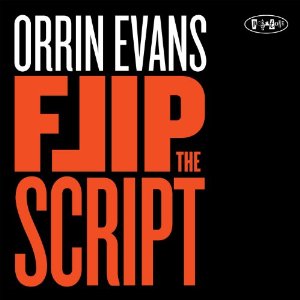
Orrin Evans: Flip The Script

Orrin Evans (piano)
Flip The Script (Posi-Tone; 2012)
Donald Edwards (drums)
Ben Wolfe (bass)

Coming off a prolific year with Captain Black Big Band and his quintet recording Freedom, Orrin Evans strips down to a trio for his latest, Flip The Script. While this trio session allows the listener more intimacy with the musicians it is still delivers some electrifying and at times elegant performances.

Working with a simpler approach, Evan's material here is more rich and organic as evident on "Clean House." Here Evan's playing is focused and crisp. Every note has a real sense of passion and urgency. A buoyant tone to Evan's keys hovers softly above the bass and drums but the unity of the trio is not diminished.

Spinning in more of bluesy flavor, "When" and "Big Small" both develop slowly and with somber undertones. "Big Small" displaying more of an uplifting nature in its unique structure. These are two pieces in which Evan's is more laid back and allows Edwards and Wolfe to provide the stronger emphasis to the proceedings.

Both "Flip The Script" and "TC's Blues" swing with a bop quality to would make Thelonious Monk and Red Garland very proud. Midtempo pieces featuring a number chord changes and sharp technique that shows a solid unity and understanding as to where each musicians lies and where their going next with the tune.

The closing number, the Gamble and Huff R&B standard, "The Sound Of Philadelphia" gets a gentle re treatment here and is more personal and effective than ever. The track is most associated as the theme for the America dance/music show Soul Train. Evan's tribute to its creator, Don Cornelius is simply sublime and the absolute best manner for closing this album.

Flip The Script returns the art of trio back to its roots. Emotional, poignant and organic. And with that ethos, Orrin Evans continues to be one of the exciting and diverse prospects on the American scene today.

Rabu, 13 Juni 2012

Red Trio: Stem

Red Trio (w/Nate Wooley)
Stem (Clean Feed; 2012)
Rodrigo Pinheiro (piano)
Hernani Faustino (bass)
Gabriel Ferrandini (drums)
Nate Wooley (trumpet)

Like the old saying goes, "wine gets better with age," so too does the fantastic Portuguese group, Red Trio.

A phenomenal yet minimal self-titled debut that features a wide array of improvised occurrences with stellar insights in composition went further with the follow up, EmpireEmpire featured British saxophonist, John Butcher as the interpretive foil to the trio's experimental exploits. This session seemed to awaken a challenging spirit within the band (especially on the title track). Now that inquisitive spirit has collided with the free form agility of one of my recent favourite trumpeters, Nate Wooley for the superb, Stem.

This quartet came together only a few months ago as a live collaboration but you can feel that Red Trio quickly developed a unique chemistry that makes this session even more personal and entertaining than Empire. The outstanding opener, "Flapping Flight" features jagged edges and improvised chords by the trio intersecting with short delicate notes by Wooley that rise and fall with romantic flavour. The piece expands as it moves into it's middle movements and creates similar exchanges to that shared on the trio's work with Butcher. Wooley and Pinheiro share a rolling battle of notes towards the end that is both captivating as it is complex.

Pinheiro's playing is at times very straight while delightful chaos occurs around him. "Ellipse" is one of those moments. Pinheiro's performance is almost Jarrett-esque but it is punctuated by canon of experimentalism on display by the rest of the group. Ferrandini's drums put on a quiet Billy Higgins type display. Rhyming when necessary and floating freely when called upon. Wooley goes from a stoic and melodic tone to dark quiet breathy exchanges with the trio almost silent adding a haunting yet organic nature to piece that is revelatory. 

"Weight Slice" has a frenzied pace that holds the listener in place while short burst of notes almost coalesce into one pattern but then brilliantly explode in the opposite direction. Wooley has individual dialogues with the trio throughout this piece. "Weight Slice" is probably the best example of the camaraderie this group has developed in such a short amount of time. The quiet almost ethereal departure of "Tides" is remincesent of Red Trio's debut. A spacious conclusion with slow droning effects and low tones that make you stop and investigate each note.

Stem is the best work to date by Red Trio and the addition of new musicians over the last two outings has only made this group better, inventive and fresh - like aged wine. Stem is one of those albums that will last with you all year long. Highly Recommended.


This is an older video but does highlight the creative thinking within the bands structure.

Minggu, 10 Juni 2012

Andres Thor: Monokrom


Andres Thor (guitar)
Monokrom (Dimma; 2012)
Scott McLemore (drums)
Porgrimur Jonsson (bass)
Agnar Magnusson (piano)

Taking time off from their more electric outings as ASA Trio, the band members have returned to working on solo material. The first to release new material this year is guitarist, Andres Thor. His third solo album, Monokrom, is a fusion of traditional melodies and modern harmonics. Joining him are his fellow ASA Trio mates and Porgrimur Jonsson on drums. This fully formed quartet brings out the best in each musician over the course of almost 60 minutes.

Thor's sound continues to mature and move from strength to strength but always with calm and a playful attitude, Thor demonstrates an excellence balance between Wes Montgomery tradition and Bill Frisell or John Abercrombie modern folk. "Monokrom" opens with a sense of fruitfulness and pleasure. Soft, romantic tones emitting from Thor's guitar and accompanied with sweet agility by Magnusson. With "Pink Wilco," Thor has written a piece that allows Jonsson and Magnusson to slide in and out seamlessly with his blues like melody.

Thor displays a great deal of passion in his performances throughout Monokrom. That Frisell vibe I spoke of early is noticeable on the folkish ballad "Heima." It has a wonderful and joyous feeling to it that gives a real sense of a travelogue. Injecting a little bit of funk into the session with "1922," Thor and rest of the band begin to flex their muscle. A forceful rhythm from McLemore and penetrating notes by both Jonsson and Magnusson make "1922" a rise and infectious number that is enhanced by the echo of Thor's lap guitar.

"Sjavargrund" is a midtempo ballad with a tinge of Brazilian flavor. Thor's playing feels very comfortable in every setting. McLemore and Jonsson provide smooth lush colors that open the sound for Magnusson's keyboards. "Munchen" is a sharp and intense closing number with the group in full swing. Each member has a shining moment on this track. Magnusson is back on piano with a rich clarity. Jonsson's bass is vibrant and McLemore rips lines with ease. All the while Thor's guitar gently cuts a path for the musicians to follow.

Monokrom is strong work from a group that knows each other inside and out. Here Andres Thor has written the right material that allows not only his musicianship to shine but also illustrates his sense of adventure and ability to move freely in different forms. This is one of those superb outings that every jazz fan would be silly to miss. 

Kamis, 07 Juni 2012

The Intersection: This Ain't Chicago

Various Artists
This Ain't Chicago (Strut Records; 2012)

I guess it's probably fitting to discuss a dance record on Friday. Usually club night for the younger generation. What's not common is to be reading about it on jazzmusic24. Well that's because every once in awhile I like to kick one into the terraces.


So drifting back into my youth came the new compilation, This Ain't Chicago guided by the stealth hand of DJ Richard Sen. And it is killer education into the early roots of the UK House scene. This collection isn't out until July 10th, but I couldn't hold back talking about it.

While everyone may know my affinity for Detroit and Chicago dance music and its subsequent effect on the UK (in particular A Guy Called Gerald); you may not know or remember the majority of stellar releases from the UK during the early years. We are talking mostly 12'' and maybe a few EPs. Sen has deftly compiled these into a smooth and cohesive document that is as enlightening as it is danceable.

Ability II drop an extended trance beat with "Pressure Dub" which features a pulsating bass, crunching synth patterns wrapped inside some beautifully looped vocals and hand claps. "Bang Bang, You're Mine," from Bang The Party comes crashing down sensually with what feels like a sample of New Order's "Thieves Like Us" hiding underneath (I'm not sure about that but that's what I felt). One of those late night tracks that should play work well during a live DJ set.

One of my favourite groups/artist during this period was Babyford. Here during his early period with a typical statement piece "Crashing" which is hypnotic and reverberates long after it's over. "Iron Orbit" and "1966" (by Static and M.D. Emm respectively), start a period of haunting house beats. Very electrifying and fast paced with pounding hand claps and drum effects. Excellent.

Rio Rhythm Band adds a Latin flavour to this collection. Their track "Cubba Jakkin'" has percussion layered over a furious yet fun-natured keyboard pattern and high whistles. Funky and jacked up for the floor.

With This Ain't Chicago, what Richard Sen has assembled is a stellar collection of UK house tracks that seriously stand the test of time. With a nice mixture of heavy beat tracks, vocals and dub, Sen curates a musical journey that moves with the night. This Ain't Chicago is a perfect and probably only way to get some of these gems without paying through the arse. But for the most part its a great education on what was happening as Detroit and Chicago began to influence it's counterparts across the way. Highly Recommended.

Rabu, 06 Juni 2012

Zero Centigrade: Umber


Zero Centigrade (duo)
Umber (Obs Music; 2012)
Tonino Taiuti (guitars)
Vincenzo de Luce (trumpet; electronics)

Crafting harmonies from nowhere is what improvisation is all about. But the duo Zero Centigrade seems to make it an easy habit. With Umber, their third release, they yet again conjured up sounds and moods that are haunting, inviting and beautiful.

Silence and the search of sound tend to make up the structure of each Zero Centigrade project. And this manifests itself early on "Tumble Down," where sudden bursts of acoustic one notes alongside stretches, creaks and found noise slowly break into your psyche like a bad nightmare.

"A Strange Season I" showers with the continued influence the blues has had on the duo. Slow patterns emerge but always evolving around Taiuti's heart tugging yet distant melody. Raw, emotional and still forward thinking. Imagine if American alt-blues guitarist Chris Whitley played with Throbbing Gristle (I sure hope some of you get that). 

The inward nature of "Stalk" and "Reflections" makes for a compelling listen. You will hear the strains of forgotten notes passing between each musician. "Far Horizon" feels distant and aching. Propelled by de Luce's superb use of electronics and Taiuti almost folkish improvisation this piece travels a long way very quickly before fading. 

Another stellar almost "third-stream" outing for Zero Centigrade that shows a continued growth and desire to see what soundscapes they can capture in a short period of time. Umber is an album that won't treat you nicely unless you let it. The beauty lies in the details. Not designed for everyone but you will find elements that will affect you in different ways. Worth seeking out.


Senin, 04 Juni 2012

The Intersection: Ebo Taylor


The Intersection is an ongoing feature on jazzmusic24 that looks at artists that have blended jazz, world and electronica in new and highly creative ways.


Ebo Taylor (vocals; guitar)
Appia Kwa Bridge (Strut Records; 2012)

Pretty much since arriving back on the scene (acclaim-wise) in the last five years, Ebo Taylor has become one of most notable world music/Afrobeat artists around. His last record, Love And Death was one of jazzmusic24's records of the year in 2010. Now Taylor has done it again for us with the release of Appia Kwa Bridge.

A terrific blend of jazz, Africa and folk rhythms that is emotional powerful and musically stunning. Built around love, loss, fear and rejuvenation, Taylor takes you on a journey that is for brave. Beginning brightly is "Ayesama," a victory song of the Ghanain ethic group Taylor belongs to, the Akan people. This group holds great stature throughout the community, not in the sense of elites but in sense of standing up for what they believe. This anthem could easily be adopted as the sign of strength for others feeling oppressed and need to be uplifted and reach higher for victory.

"Nsu Na Kwan" builds on a number of percussive beats but is also driven by Taylor's soft and enthralling delivery both on guitar and vocals. "Appia Kwa Bridge" is a meeting place for friends, lovers and more to express their views and outlook on life, love and beyond. Boyuant and filled with dreams, this bridge could tell the story of many Ghanaians.

"Barrima" is the most affecting track on the album. Speaking directly to the loss of his wife just a few months ago, this track has all the emotional impact that live on its own from the rest of the album.  The piece is Ebo alone, on acoustic guitar with only his soul on show. Touching and embodying why music is important to our lives.

With Appia Kwa Bridge, Ebo Taylor has going back to his acoustic and lyrical roots. It's even more dynamic than Love And Death but shows the living legend has more messages to deliver to us all about life and how to live it. One of our albums of the year. HIGHLY RECOMMENDED!

Jumat, 01 Juni 2012

Tom Tallitsch: Heads Or Tales

Tom Tallitsch (sax)
Heads Or Tales (Posi-Tone Records; 2012)
Dave Allen (guitar)
Mark Ferber (drums)
Jared Gold (organ)

You know those albums that you fall in love with immediately after about two songs in--well this one of those albums. Tom Tallitsch delivers a killer does on hard bop that is fueled by both some heavy chops as well as crisp songwriting. His fourth album (first for Posi-Tone), Heads Or Tales is simply an awesome display of muscle and dynamics.

Like a late night jam session, Heads Or Tales kicks off in fine form with "Coming Around," a real barn-burner. Tallitsch rips through a number of chords and his newly assembled quartet adds fuel to the fire with Allen and Gold sparking hot exchanges that match the saxophonist's muscle.


The luscious ballad, "Perry's Place," is absorbing. Tallitsch gives a deep soulful performance that instantly grabs you. Gold's organ stays close with a rhythm providing strong effect. Feber's drums are tempered here but still add soft touches just under the melody.

"Travel Companion" is a well paced midtempo piece in which Tallitsch allows Gold and Allen to show-off some solid individuality. Tallitsch comes back in to bring the band home with some warm tones as closing notes.


"Dunes" moves along swiftly and sweetly. Ferber conjures up some nice patterns that rise and fall alongside Tallitsch rhythms. Allen lays down some chords that felt almost early George Benson-esque. For some reason I kept gravitating back to this track. There's something quietly entrancing and beautiful about the harmonies that you might find as well.

Closing out on Neil Young's "Don't Let Bring You Down" is pretty brave. And you almost don't recognize it until you get to the chorus. This introspective ballad gets a heavy treatment that ends up being more surprising than you would originally imagine. It's treated with care but still creating its own identity.

Heads Or Tales is more than just another solid session for Tom Tallitsch. It's a document that really should awaken the eyes and ears of many would need to know his name and his skill as a composer and musician. 

Selasa, 29 Mei 2012

Aruan Ortiz: Orbiting

Aruan Ortiz (piano)
Orbiting (Fresh Sound/New Talent; 2012)
Eric McPherson (drums)
David Gilmore (guitar)
Rashaan Carter (bass)

Aruan Ortiz was one of the outstanding contributors to Esperanza Spalding little known first album, Junjo. His playing is calculating and well developed. I freely admit that I don't own much other than his previous quartet record and the Spalding album but I really believe he is a serious rising talent.

Only on the scene for a few years, he is slowly becoming a well known name within the scene. His style at times reminds me of a young Chick Corea. 

His second (fourth as leader) album with his quartet, Orbiting is a wonderful and elegantly executed session that takes chances when needed and stays reverent on others. "Orbiting" features a set of stellar performances by Ortiz and Gilmore. Ortiz seems to move freely and applies a great deal of emotion with each chord. Gilmore's patterns add a nice groove that also turns bluesy on the next track "The Heir." This number includes a number sparkling movements by Ortiz and McPherson that ascend into a massive crescendo towards the end.

Ortiz shows adventure and inspiration with his version of Ornette Coleman's "WRU." A good dose of improvisation by Ortiz and Carter. Their movement together is fluid yet pulsating.

Deep, emotional and intensely rewarding. Aruan Ortiz has produced a superb collection that pretty much everyone will find a big surprise. Orbiting is modern yet still rooted in tradition. Highly Recommended.